
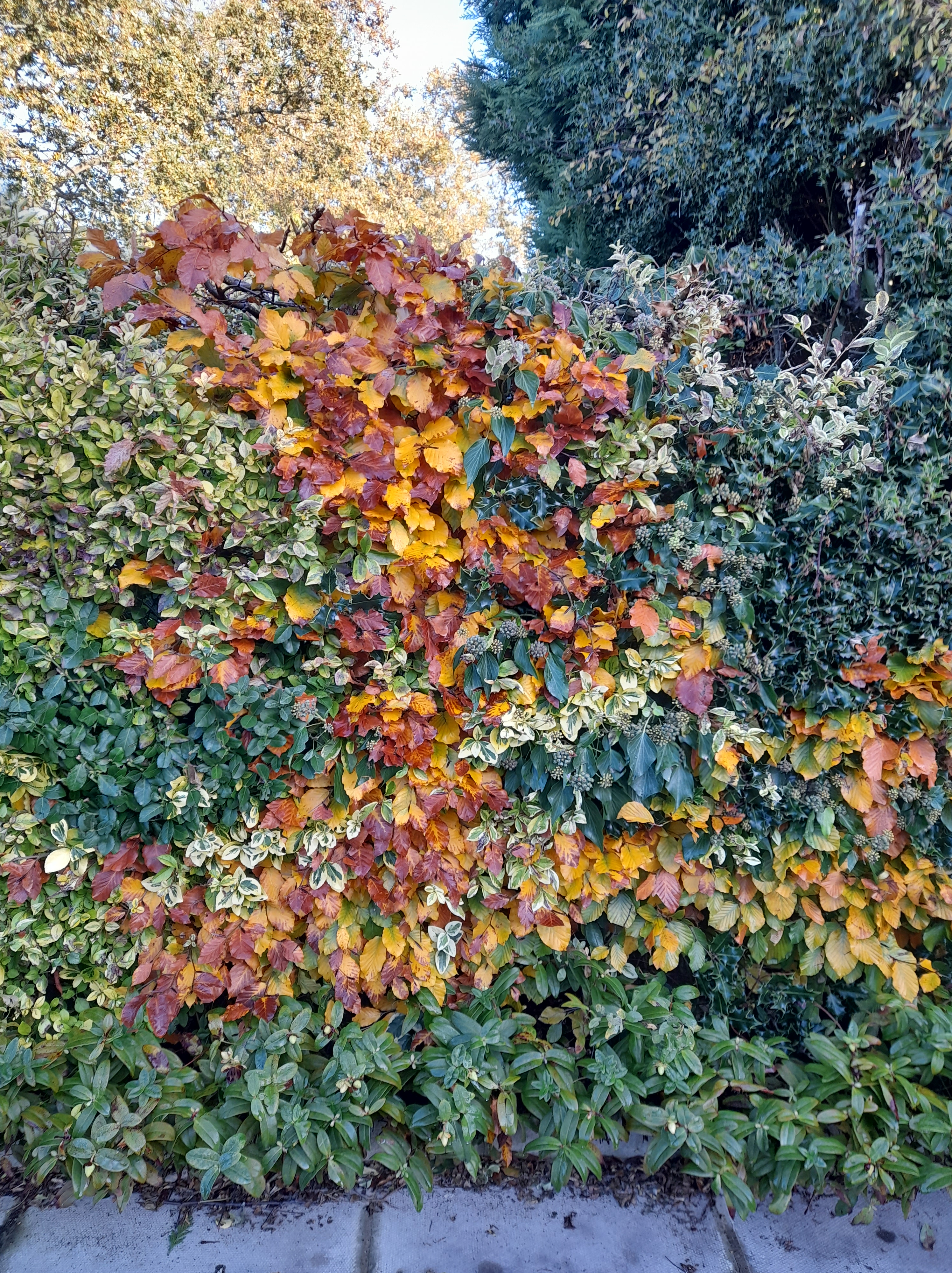
In my back garden, the hedge looks amazing: privet, ivy, beech, and holly, all so colourful on this bright, sunny morning! November and Samhain mark the beginning of winter in the old calendars.
I couldn’t complete my artwork for this period, so instead I’ve added the photo above from the garden this morning. It is a wonderful morning, with the low sun still strong enough to lift our spirits. Looking back over the last 12 months has me wondering about the next chapter in our lives. It has been a difficult time for us, as we adjust to ongoing health issues and, of course, growing older. Samhain, Halloween, is a time to remember our ancestors and all those who have passed. It is a time of remembrance and gratitude for the gifts of life our ancestors passed down to us.
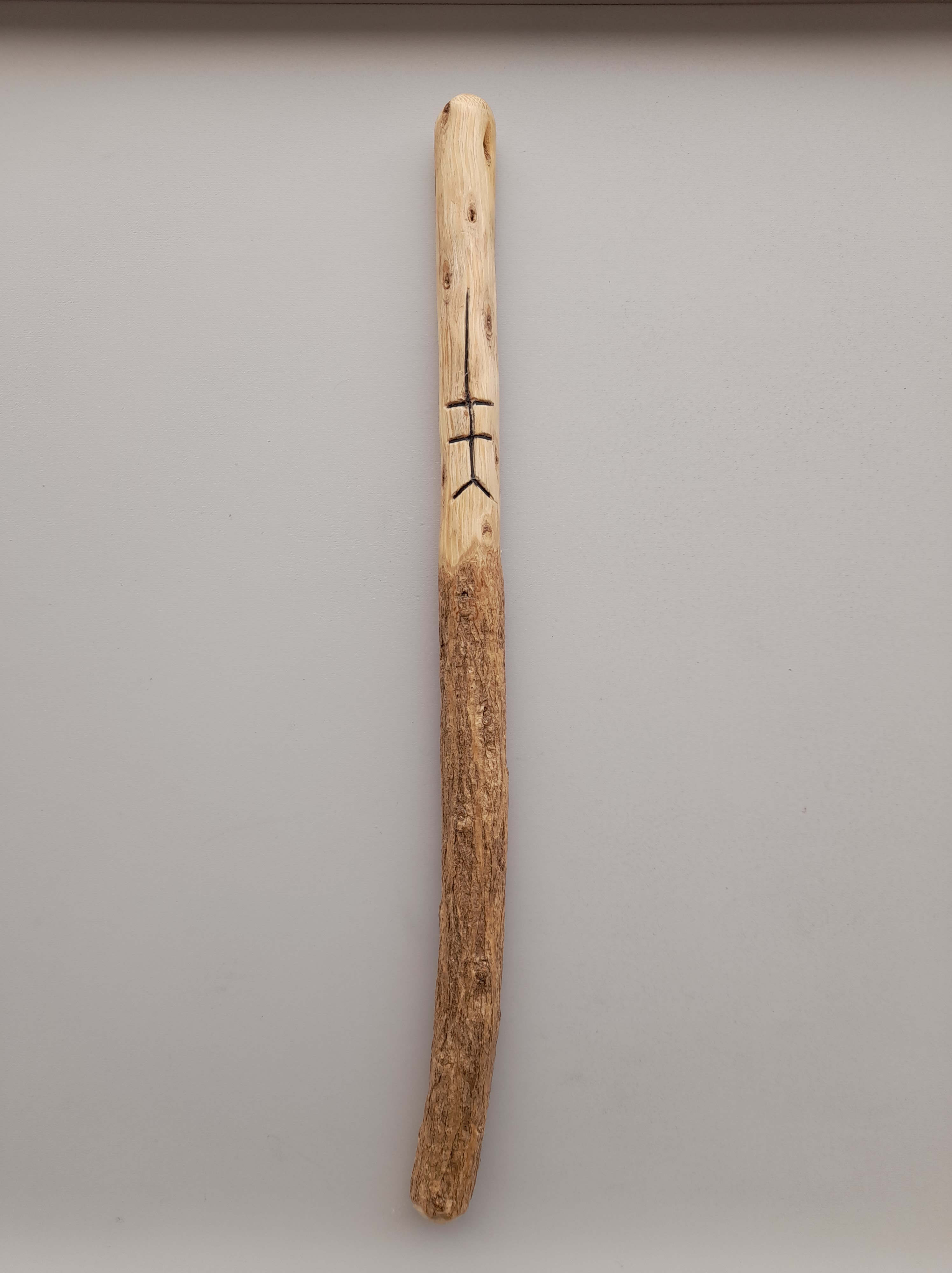
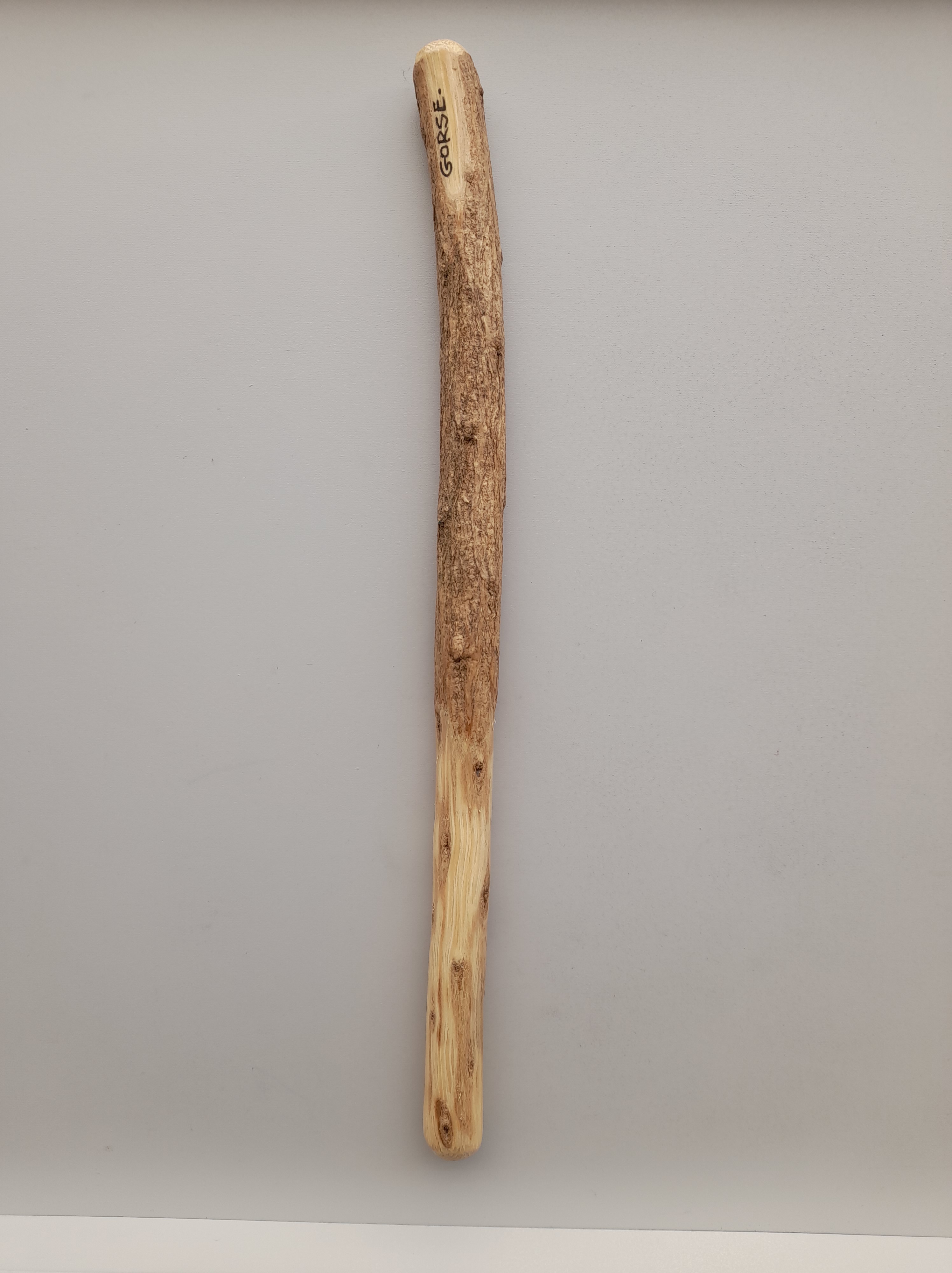
Gorse Ogham stick
According to Yuri Leitch’s book The Ogham Grove*, gorse is the 1st herald of Samhain. Common Gorse, Ulex europaeus, is the 17th letter of the ancient Celtic alphabet, O (Onn), and while it is a shrub rather than a tree, it can grow to around 2.5 m. Its bright yellow flowers are coconut-scented and usually appear between January and June. On grey winter days, it is a treat to find it in flower. Its leaves are spiky and needle-like. It occurs along woodland rides and in under-grazed pastures. Its very spiky nature provides good protection for small birds.
Depending on your locality, gorse is also known as whin or furze.
Wounding thorn,
Fire in winter;
Golden gorse.
Ashley
*The Ogham Grove by Yuri Leitch. ISBN 9781517653637

